
Varied framing and header heights
A lot of the houses in this part of the service area were built between 1953 and 2014, with the median landing around 1992, and that range covers a lot of different framing widths, track styles, and header heights.
Bedford, TX
Bedford Garage Door Pros installs garage doors sized for the 1953-2014 housing stock around Bedford, TX, matching tracks and openers to original framing and hardware.
Pricing
We're not going to throw a number at you that doesn't mean anything once we're standing in your driveway. What drives the cost of a garage door installation here isn't some flat rate - it's the opening you've got.
A lot of the houses in this part of the service area were built between 1953 and 2014, with the median landing around 1992, and that range covers a lot of different framing widths, track styles, and header heights.
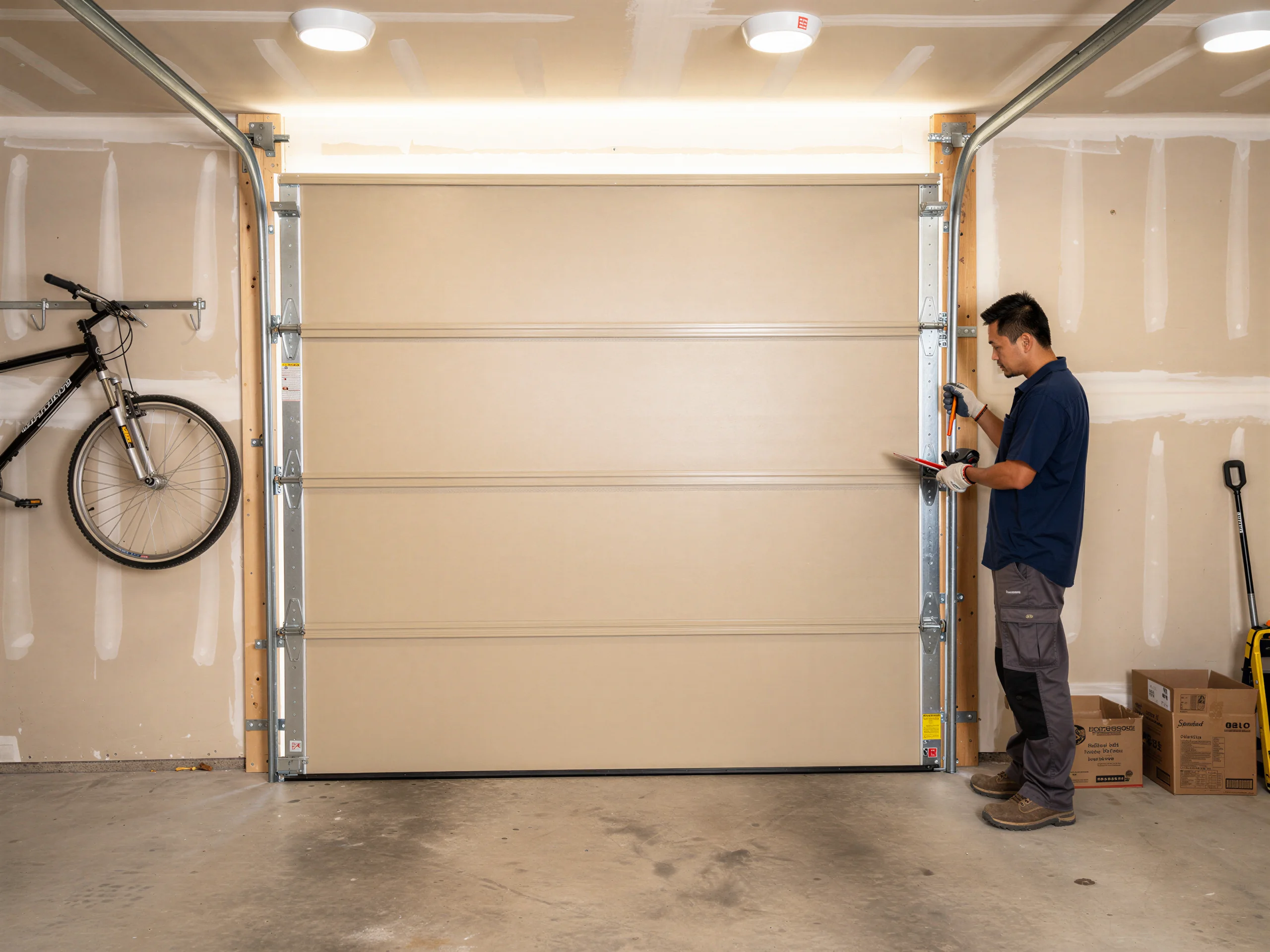
A straight swap on a standard 16-foot double in a house built close to that 1992 median is a different job than retrofitting a garage built in the 1950s that was never squared up for a modern sectional door in the first place. We don't quote a job until someone measures the opening, checks the framing, and sees what the old track and spring setup is doing to the header.
If your garage was framed for a one-piece door and you want a sectional, that's carpentry work on top of the door itself, and it changes the number. We'd rather walk you through what we find on-site than hand you a figure that falls apart the moment we open the garage. That's the honest version, even if it's less satisfying than a price on a page.
Local causes
Most of the housing stock across this stretch - Bedford and the 31 named areas around it, from Mosier Valley just 2 miles SSE up through Keller, Richland Hills, and Haltom City within 6 to 8 miles - clusters heavily in that 1980s and 1990s construction window, with the overall range running 1953 to 2014 and a median build year of 1992. That matters for installation because openings framed in that era were built to the door specs and track hardware common at the time, not to what's sold today. Headroom clearances, jamb widths, and the position of the opener rail were all sized for a door that's now out of production.
The climate band here is moderate heat, not the kind of extreme swing that warps steel panels or blows out seals in a season. So the failure mode we run into on installs isn't storm damage - it's mismatch. Homeowners want to upgrade to a modern insulated door or a quieter opener, and the old framing, the old track spacing, or the old low-headroom setup doesn't accept the new hardware without modification. That's a local building-stock problem, not a weather problem, and it's the main reason a straight swap-in job here often turns into something more involved.
Warning signs
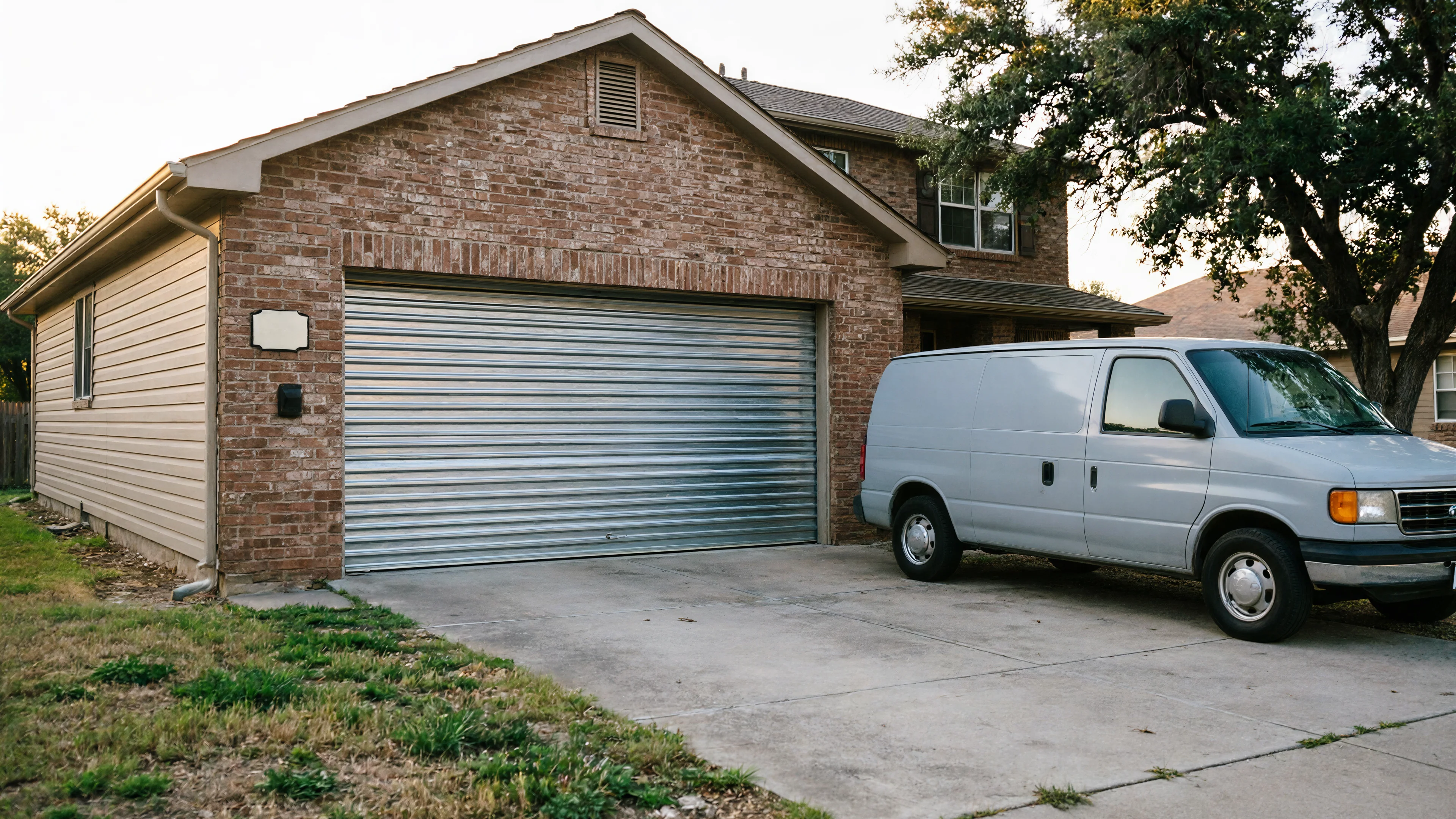
If you're looking at an installation rather than a repair, you're probably one of two kinds of homeowner. Either the door you have is original or close to it - likely dating somewhere in that 1953-2014 build range, with a lot of houses landing near the 1992 median - and the panels, springs, or track are worn enough that replacement makes more sense than another patch.
Or you're upgrading: swapping a single-layer steel door for something insulated, or moving from a chain-drive opener to something quieter, and the existing opening wasn't built for the new unit. In older openings, especially ones from the earlier end of that build window, you'll often see narrower jamb returns, lower headroom, or a track position that doesn't line up with where a modern opener rail wants to sit.
In newer construction toward the later end of the range, the opening is usually already sized for standard sectional doors, so the install is more straightforward - new door, new opener, same bones.
Either way, what you're seeing on the surface - a door that looks tired, or a plan to upgrade - usually traces back to when the garage itself was framed, not to anything wrong with the door you're replacing.
The repair
An installation isn't a repair, but it starts the same way - with someone actually looking at the opening before any hardware shows up. On a house near that 1992 median build year, that usually means pulling the old door, checking the jamb and header for square, and confirming the track and spring mounts will take a modern door's weight and spring tension.
On older houses toward the 1953 end of the range, we sometimes find framing that needs reinforcing before a new door goes in at all - that's not a cost-cutting shortcut, it's a structural step we won't skip.
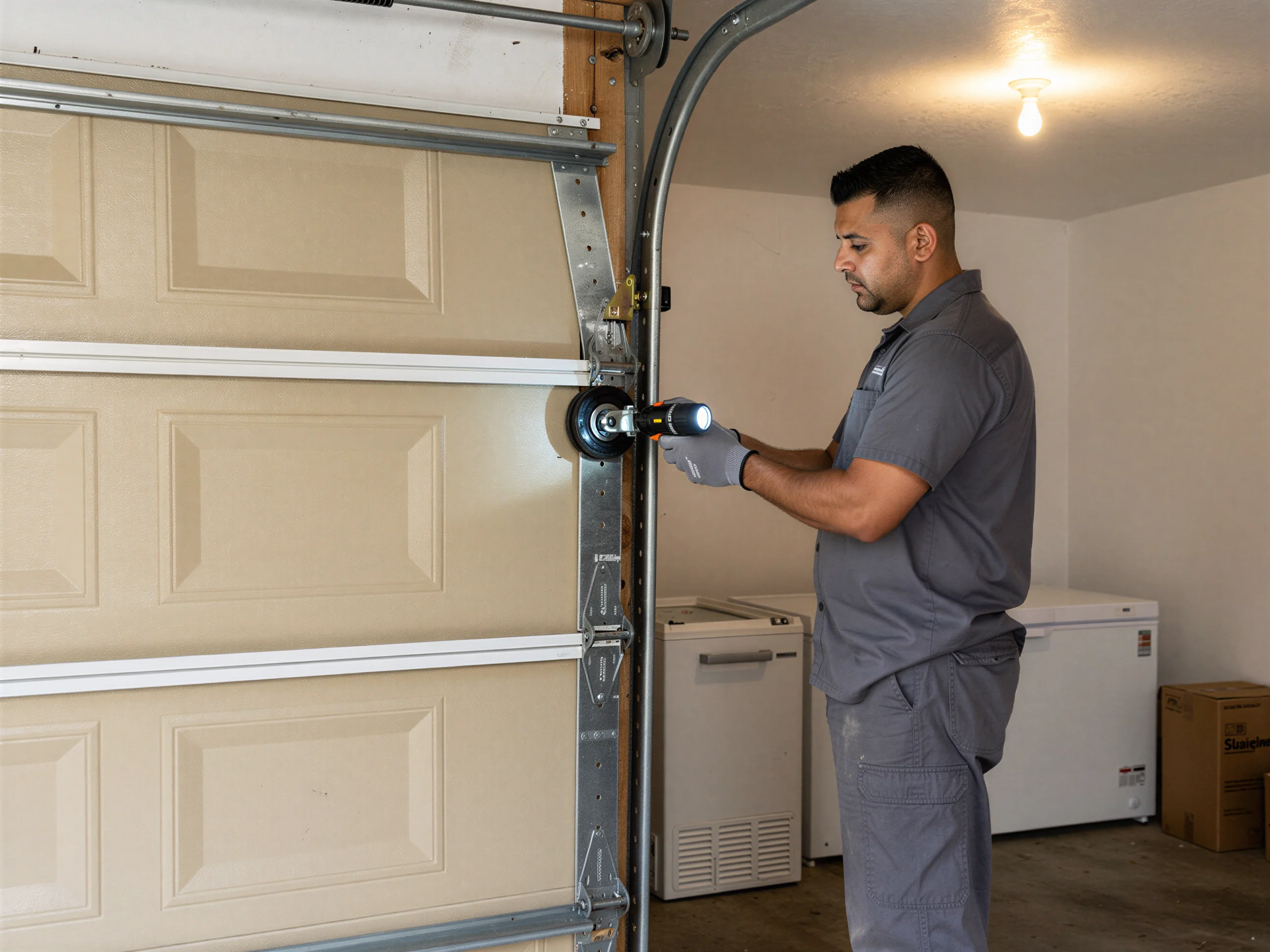
We size the door, track, and opener to the opening as it actually is, not as a catalog assumes it should be. If the house was framed for a one-piece door and the new door is sectional, that means new track hardware and sometimes new header blocking.
We're straightforward about one thing: we don't do custom millwork or siding repair. If the opening needs framing carpentry beyond the garage door hardware itself, we'll tell you that upfront rather than stretch the job into something it isn't. A clean, square opening installed right the first time matters more than finishing fast.
Questions
If the panels are cracked, the track is bent beyond adjustment, or the springs and hardware are original to a house built decades back, replacement usually makes more sense than another round of patching. We'll look at the actual wear and the opening itself before recommending either direction - we don't push a full install when a repair would hold up fine.
Not always without some adjustment. Houses toward the earlier end of the 1953-2014 build range sometimes have narrower jambs or lower headroom than today's standard doors expect. We measure the opening first and tell you if it needs modification before we quote the door itself.
We can often work with low-headroom openings using different track hardware, but it depends on the specific clearance in your garage. That's something we confirm on-site, not something we can promise sight unseen.
The climate here sits in a moderate heat band rather than extreme swings, so insulation choice is more about comfort and noise than fighting warping or storm damage. It still matters for an attached garage, but it's not the driving factor behind most install decisions here.
Explore more
Ready when you are
Bedford Garage Door Pros repairs and installs garage doors, springs and openers in Bedford, TX and the surrounding area.