
Blog
What That Noise From Your Garage Door Is Trying to Tell You
Bedford homes built mostly in the 1980s and 90s have specific noise patterns tied to original hardware and heat cycling. Here's what each sound points to.
What Local Conditions Do
Bedford's housing stock runs from 1953 up through 2014, but the median build year sits around 1992, and most of what you see driving through the neighborhoods dates to that 1980s-90s wave. That matters for noise because doors from that era were almost always installed with extension springs mounted along the horizontal track, not the torsion setup builders favor now. Extension spring hardware rattles differently as it ages - you get a slap-and-bounce sound on the way up instead of a smooth pull.
Our climate band here is moderate heat, not the extreme swings you'd get further west or in the Panhandle, but Bedford still runs long stretches of 90-plus days where garages sit closed and hot. Nylon rollers and plastic idler bearings on a 20 or 30-year-old door don't love that. They dry out, shrink slightly, and start ticking against the track at a steady rhythm - one click per roller per revolution. That's a different sound from a spring problem and it calls for a different fix.
If your house is in the part of town that goes back further, including older sections like Mosier Valley just southeast of the main grid, the hardware gap can be even wider. A door that's never been touched since the house was built is carrying 30-plus years of wear on parts nobody machines the same way anymore.
Doing Nothing For Now
Not every noise means the door is about to fail. A light rattle in the track on a breezy day, or a single thunk when the door seats at the bottom of a slightly uneven slab, is normal wear and not worth a service call. Bedford's housing stock includes a lot of concrete driveways and slabs poured decades ago, and minor settling is common - it doesn't mean your door is failing, it means the floor moved a little and the door is telling you about it.
If the noise is consistent, doesn't get louder, and the door still opens and closes at the same speed it always has, you can reasonably wait. Lubricating the rollers and hinges with a garage-door-rated lubricant (not household oil, which attracts grit) often quiets things down for months. We'd rather you try that first than pay a trip charge for a problem that's cosmetic.
The exception is anything that changes suddenly - a new grinding sound, a door that jerks instead of glides, or a bang that wasn't there yesterday. Gradual and steady is usually fine. Sudden and different is the one to call about.
The Problem
The actual failure pattern we see tied to Bedford's building years is straightforward: doors installed when the house was built, between the early 1990s and today's median, are now old enough that the springs have done their rated number of cycles, and the original hardware was sized for the door and the climate of that decade - not necessarily for 30 years of Texas heat cycling.
A stretched or fatigued extension spring makes a distinct noise: a rhythmic creak that gets louder as the door nears full open, sometimes with a visible gap opening between spring coils. That's different from a torsion spring issue, which tends to show up as a loud bang when the spring itself lets go, often with the door refusing to move afterward.
With 75,318 owner-occupied houses across this service area, we see the same few patterns over and over, not because every door is the same age but because so much of the stock clusters around that 1980s-90s build window. Heat-dried rollers ticking, fatigued extension springs creaking, and loose track brackets rattling account for most of the calls that start as 'just a noise.' None of those are emergencies on day one, but none of them get quieter on their own either.
What to Look At First
Start with what the noise does, not just what it sounds like. A tick that repeats once per second as the door moves is almost always a roller. A creak that builds as the door rises is almost always a spring. A bang followed by the door refusing to open is a spring that's already gone - stop using the opener and call, because running a door on one working spring strains the opener motor and the remaining spring.
Check the track brackets where they bolt to the frame. On houses from Bedford's main build era, those brackets are original hardware, and loose lag screws in aging wood framing are a common, cheap-to-fix source of rattle. A ratchet and five minutes sometimes solves what sounded like a bigger problem.
We're straight with people about this: if your door and opener both date to the original build and the springs have never been replaced, the honest move is often a spring replacement now rather than waiting for a full failure at an inconvenient time. We don't push full door replacement unless the panels themselves are rusted or cracked - a sound spring and track job on an otherwise solid door is usually the better value.
Questions
Common questions
Why does my garage door make a clicking sound only in summer?
Heat is the likely driver. Bedford's moderate-heat climate still means long runs of hot days, and nylon rollers or plastic bearings dry out and shrink slightly in the heat, ticking against the track once per rotation. It's usually a roller replacement, not a major repair, but it won't fix itself in the cold months - it just gets quieter.
My door creaks louder every time I open it. Is that urgent?
A creak that builds as the door rises points to a fatigued extension spring, common on houses built in the 1980s and 90s with original hardware. It's not an emergency the first time you hear it, but it tends to progress to a full spring failure. Worth scheduling before it bangs and leaves the door stuck.
Should I just replace the whole door if it's noisy?
Not usually. If the panels are solid and the noise traces to rollers, a spring, or a loose bracket, those are cheaper fixes than a full door. We'd only recommend replacement if the panels are rusted, cracked, or the door is original to a house old enough that parts are hard to source.
Recommendation
You Might Also Like
More garage door guides for Bedford homeowners.
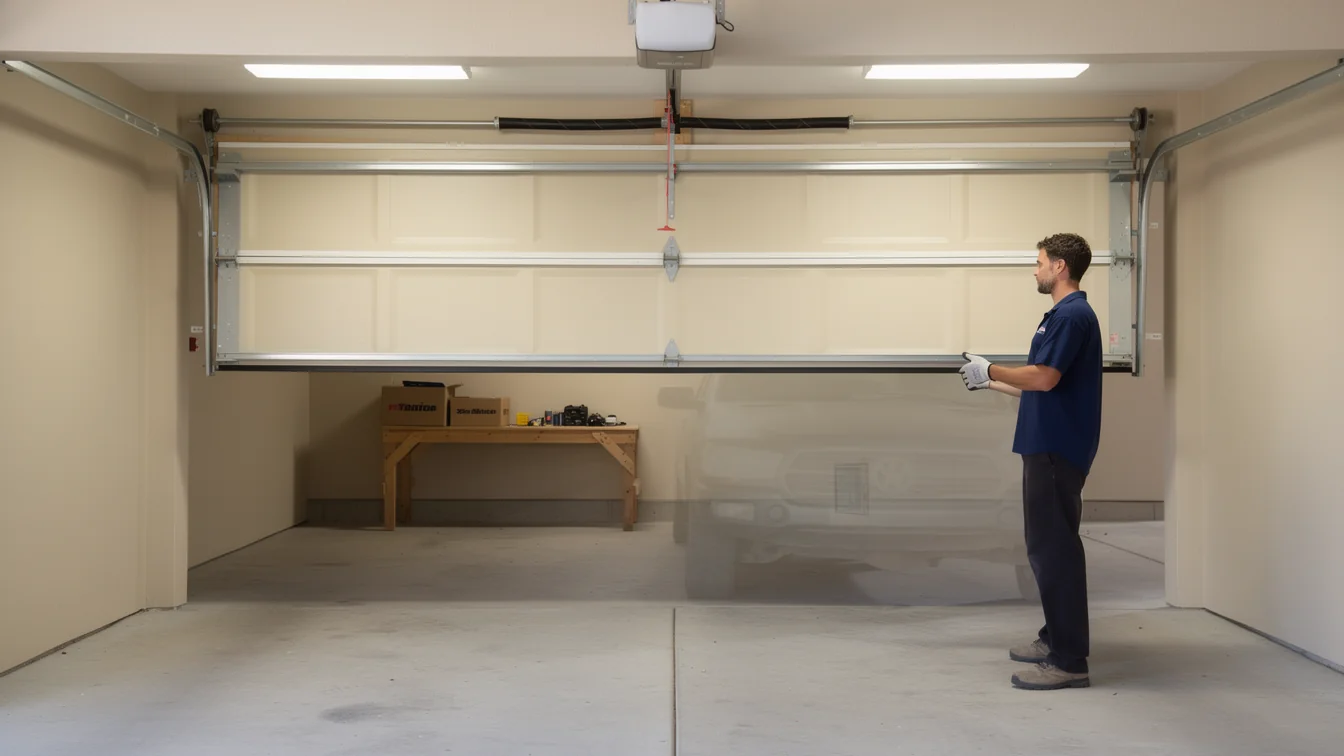
Why Your Bedford Garage Door Keeps Jumping the Track
Bedford homes built mostly in the 1980s and 90s show specific off-track patterns tied to original hardware age and Texas heat.
Read guide
Weather Seals and Draughts in Bedford Garages
Bedford homes built mostly between 1953 and 2014 develop gaps around garage door seals from heat cycling.
Read guide
Bedford Garage Door Openers and Power Outages: What Actually Fails
Bedford, TX garage openers built in the 1980s-90s often fail during storm power cuts and summer heat spikes.
Read guideReady when you are
Need a garage door sorted in Bedford?
Bedford Garage Door Pros repairs and installs garage doors, springs and openers in Bedford, TX and the surrounding area.