
Bang then no movement
A door that won't budge at all, especially if you hear a bang first, is almost always a broken torsion spring - common on the original hardware installed in houses from the 1980s and 90s that make up most of this area's stock.
Bedford, TX
Bedford homes built between 1953 and 2014 wear out garage door hardware in predictable ways. Here's what actually fails, why, and what the repair involves.
Pricing
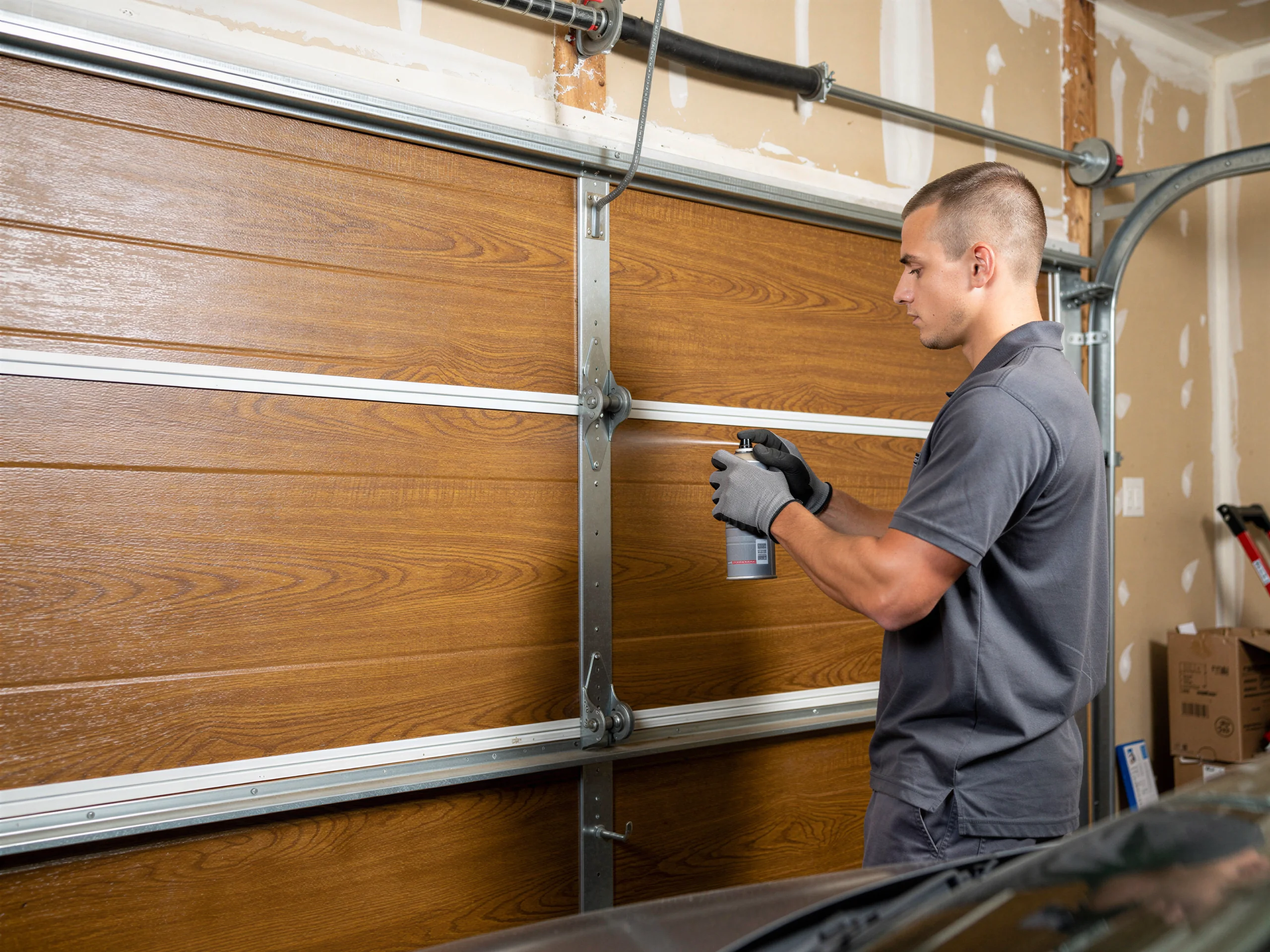
We don't post a flat number here, and we won't make one up. What a repair runs depends on what's actually broken - a worn roller on a 2005-built house is a different job than a seized torsion spring on a door that's been there since the early 1990s, which is closer to the median age of housing stock in this part of Bedford. Opener age matters too, since a lot of the original units from that build era are long past the parts-availability window.
What we can tell you: we don't quote a price over the phone sight-unseen, because a cable that's frayed but holding versus one that's already jumped the drum are not the same call, and guessing costs you either way. We look at the door, the track, the spring size, and the opener before we say a number. If a repair doesn't make sense against the cost of replacement - which happens more often on doors from the older end of the 1953 start date for this area's housing - we'll say so instead of running up a bill on a door that's on its way out anyway.
Local causes
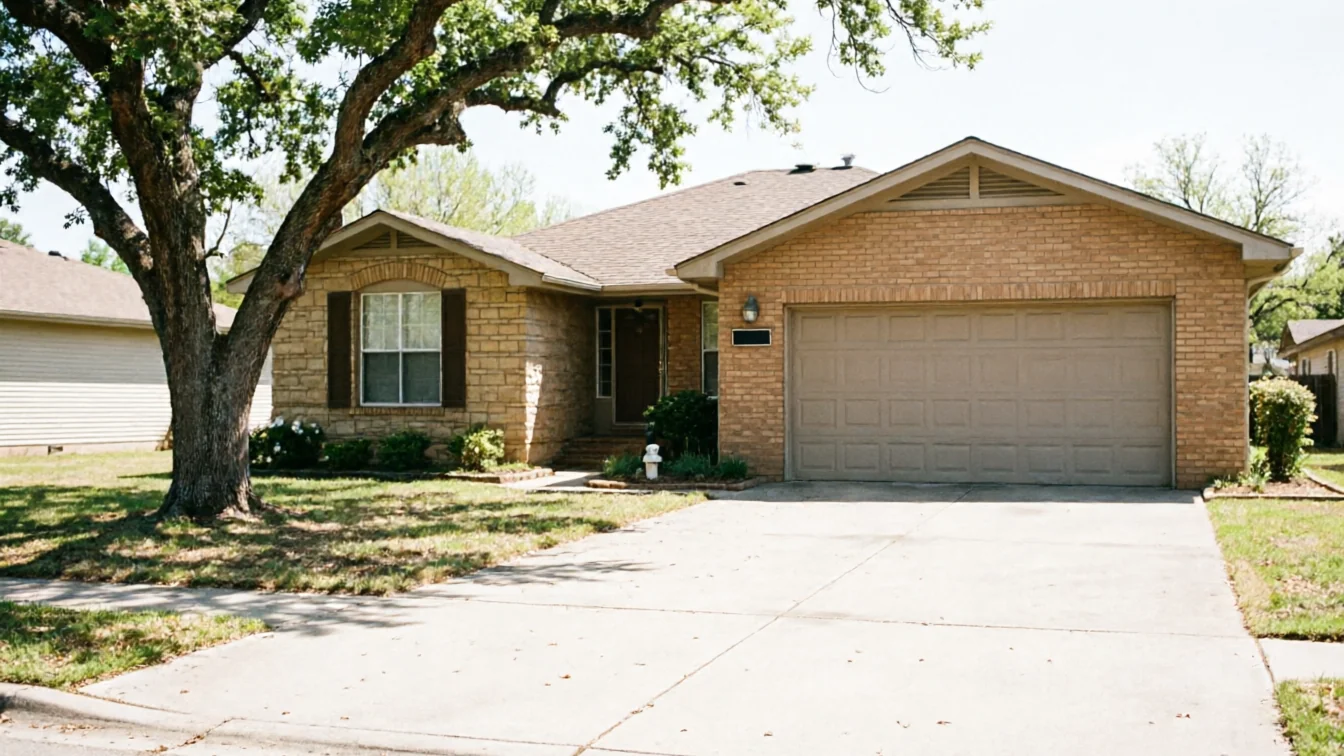
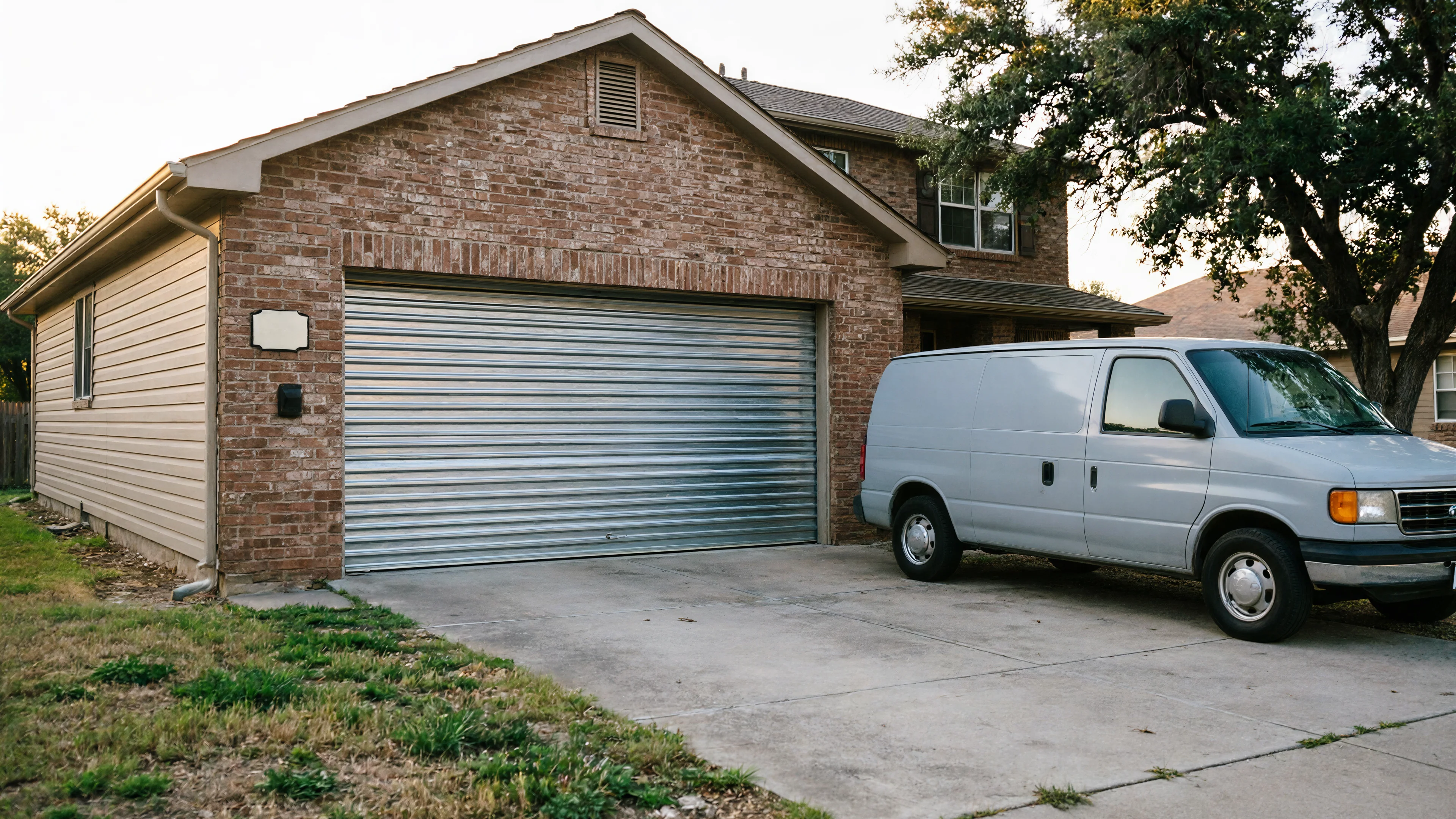
Bedford's housing runs from 1953 up through 2014, but most of what you see across the area's 31 named sections is 1980s and 90s construction, with a median build year around 1992. That matters for garage doors specifically because that generation of homes shipped with torsion spring setups and opener models that were standard for their decade but are now thirty-plus years into a mechanism that wasn't built to run that long.
The climate band here sits in the moderate-heat category, not the extreme end of the Texas spectrum, but even moderate heat cycling still works on steel tracks, nylon rollers, and the lubricant inside a spring coil year over year. On a door that's original to a 1990s build, that's three decades of daily thermal expansion and contraction on hardware that was never serviced. Combine the two - an aging housing stock clustered in that late-80s-to-90s window, and a climate that still runs hot enough to dry out grease and warp weatherstripping - and you get a specific, predictable failure pattern rather than a random one. It's not that Bedford doors break more often than anywhere else; it's that a large share of them are the same age, built to the same codes, and hitting the same wear point at close to the same time.
Warning signs
If your door is slow to open, drifts off-track, or makes a grinding noise partway through its cycle, that's usually a roller or track issue, and on an older build it's often paired with a spring that's lost tension gradually rather than snapping outright.
A door that won't budge at all, especially if you hear a bang first, is almost always a broken torsion spring - common on the original hardware installed in houses from the 1980s and 90s that make up most of this area's stock.
A door that reverses itself halfway down, or won't close past a certain point, points to the opener's sensors or limit settings rather than the door itself - and on units original to a home built in that same window, the opener itself may simply be at the end of its service life.
Sagging on one side, or a door that looks slightly crooked when it's down, usually means a cable has started to fray or a bottom bracket has shifted. None of these are emergencies you should ignore, but none of them need a same-day panic either, except the broken-spring bang, which you should not try to work around yourself.
The repair
Most spring and roller jobs on a standard double door take under two hours once we're on-site with the right parts for the hardware size.
Torsion springs come in specific wire diameters and wind directions, so on an older door - anything close to that 1953-to-early-90s range - we match the spring to what's actually on the door rather than guessing from a chart, because the originals weren't always standardized.
Opener work is separate from spring work, and if yours is original to a build from that same decade, we'll tell you straight if replacement parts are hard to source rather than stringing out a repair on a unit that's past its practical lifespan.
Track and cable work is usually faster - an hour or so - but if the track itself is bent rather than just misaligned, that's a replacement, not an adjustment, and we won't try to bend it back into shape and call it fixed. The honest limitation here: we don't carry every obsolete opener model in the truck, so if yours is a less common brand from that era, there may be a short wait on a part.
Questions
Torsion springs lose tension gradually from thousands of open-close cycles and from heat cycling over the years, even in a moderate climate like Bedford's. By the time it snaps, it's usually been weakening for months. Houses built in the 1980s and 90s, which make up most of the area's stock, are hitting that wear point now.
If your opener is original to a house built in the 1980s or 90s, parts for that specific model may be hard to find. We'll check before we commit you to a repair, and if replacement makes more sense than chasing discontinued parts, we'll tell you that instead of billing for a long-shot fix.
No. Spring size, opener age, and track condition all change the cost, and guessing a number over the phone means either lowballing you or padding the estimate. We look at the actual door first.
Not an emergency, but don't leave it open overnight. It's usually a sensor or limit-switch issue rather than the door itself. Get it looked at within a few days - leaving a door that won't seal invites pests and weather into the garage.
Explore more
Ready when you are
Bedford Garage Door Pros repairs and installs garage doors, springs and openers in Bedford, TX and the surrounding area.