
Early-caught versus snapped cables
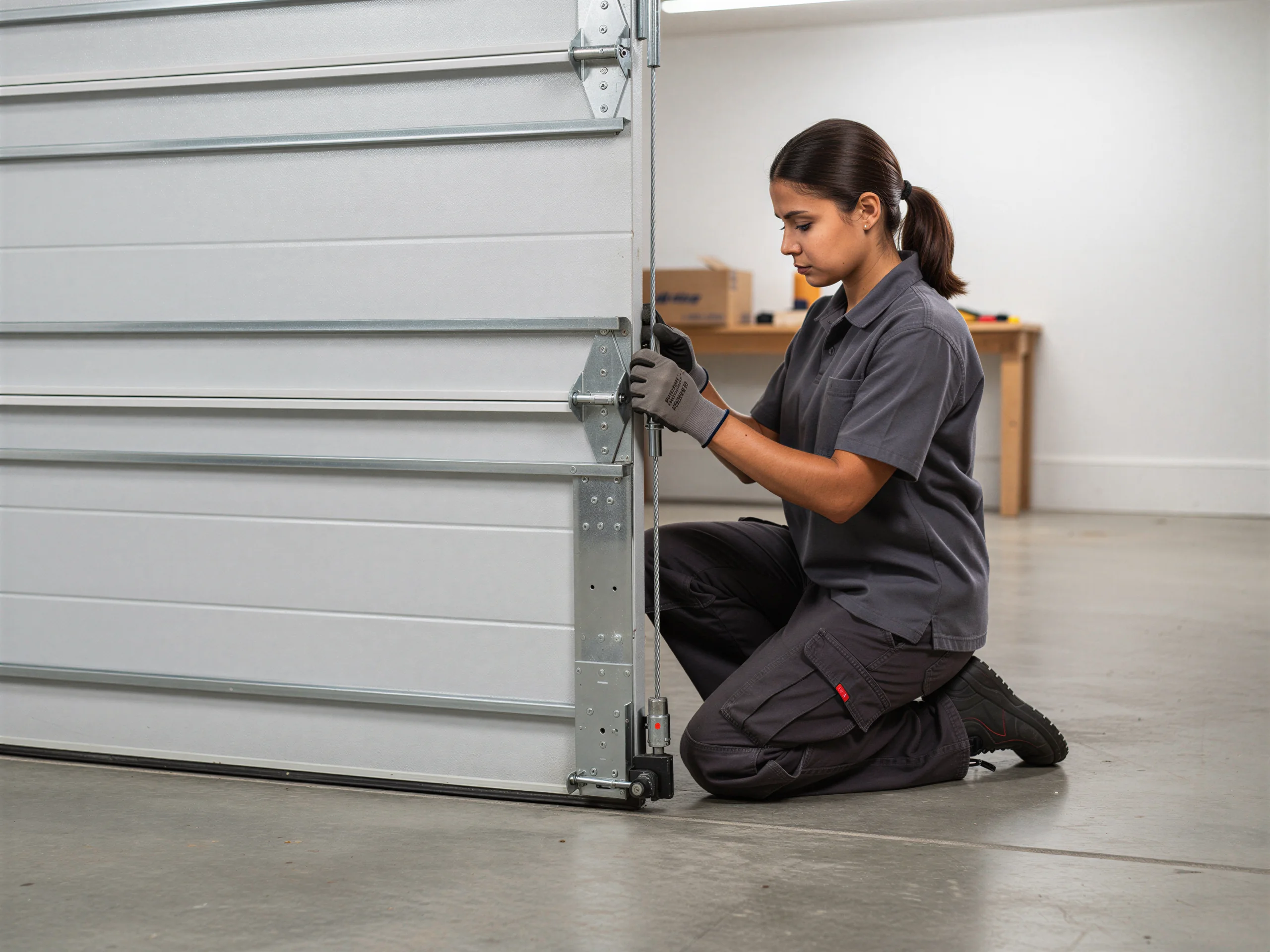
A single frayed cable caught early, before it jumps the drum, is a different job than a cable that snapped under tension and let the door drop crooked on one side.
Bedford, TX
Frayed, snapped, or off-drum garage door cables are common in Bedford's older housing stock. Here's why it happens, what it looks like, and what the fix involves.
Pricing
We're not going to put a number here that doesn't hold up once a tech is standing in your driveway. Cable repair pricing depends on whether one cable snapped or both, whether the drum or track got chewed up when the cable came off, and whether the spring that the cable rides with is still good or needs replacing at the same time.
A single frayed cable caught early, before it jumps the drum, is a different job than a cable that snapped under tension and let the door drop crooked on one side.
What we can tell you is that cables rarely fail alone - on a door old enough to need this repair, the spring and rollers have usually logged the same years of wear, and a tech worth calling will check all three before quoting just the cable.
Anyone who gives you a firm price over the phone without seeing the door is guessing. If you want an honest number, that happens after someone looks at the drum, the track alignment, and the spring condition in person.
Local causes
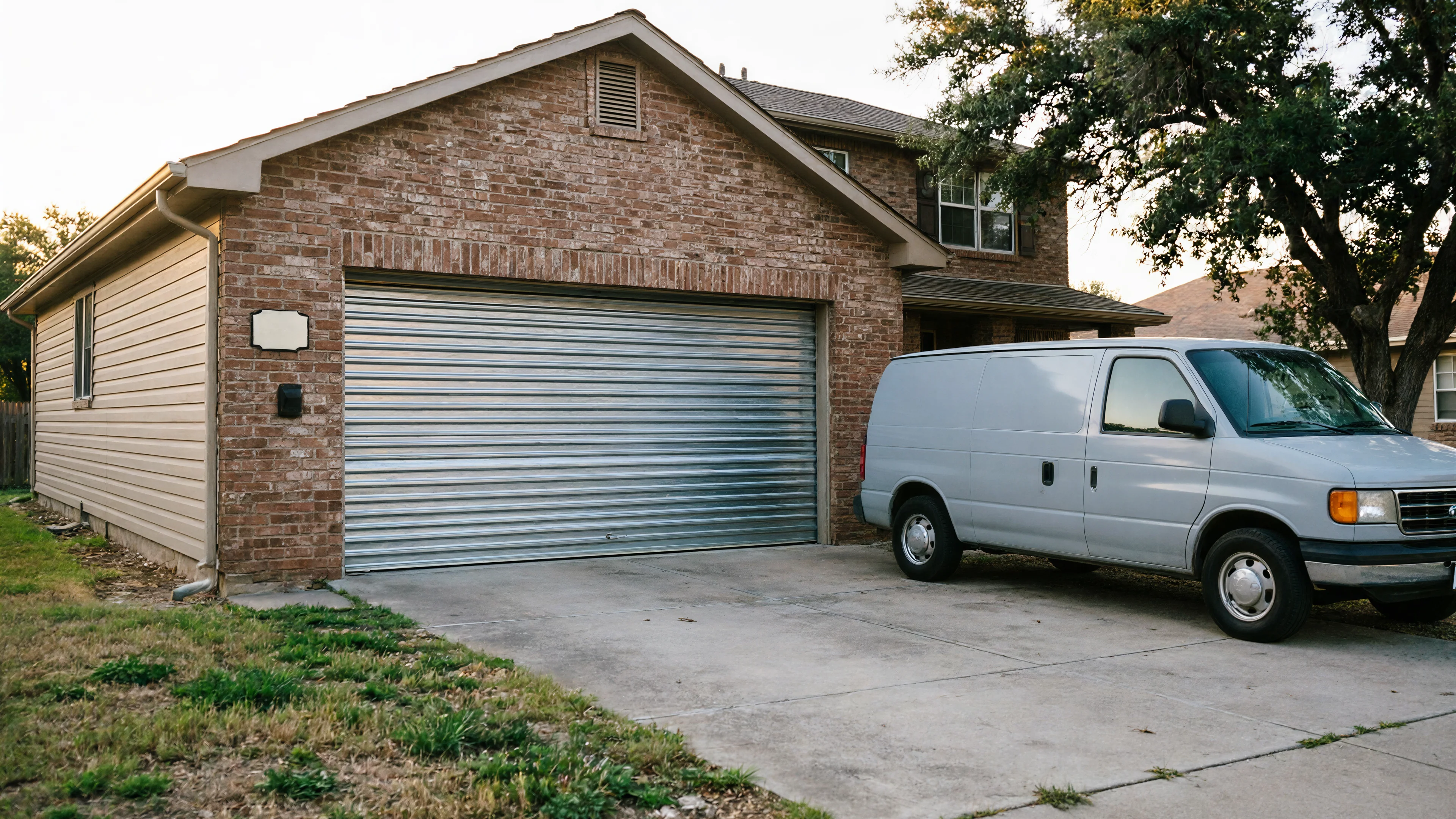
Housing in this service area was mostly built between 1953 and 2014, with the typical home going up around 1992, and the bulk of the stock across the 31 communities in this corridor dates to the 1980s and 90s. That matters here specifically because builder-grade doors from that era were hung with lighter-gauge lift cables than what goes in today, and those original cables are now thirty-plus years into a job they were never rated to do forever. Add in a moderate-heat climate band - not the triple-digit extremes of far-west Texas, but real summer heat that bakes an attached garage for months at a stretch - and you get steady thermal cycling on galvanized steel strands that slowly loosens the braid. That's a slower failure than a cold-climate cable snapping from brittle metal, but it's just as real: strand by strand, the cable thins out until one hard open or close is the one it doesn't survive. On a door that old, a cable that frays is doing exactly what thirty years of heat and use would predict.
Warning signs
The door looks crooked when it's halfway open or closed, higher on one side than the other, because one cable has slipped off its drum while the other is still carrying weight.
Sometimes you'll see the cable itself - a cluster of thin wire strands sticking out near the bottom bracket, which means it's frayed and close to going. Sometimes there's no warning at all: the door drops suddenly on one corner, with a loud bang, because the cable already separated.
If the garage door opener keeps running after the door's stopped moving, or the door won't budge past a few inches, that's also consistent with a cable off the drum rather than a dead opener.
One thing worth saying plainly: a door that's dropped crooked on a slack cable is under spring tension on the other side, and that's not a weekend-project fix. It's a call-a-tech situation, not a tighten-this-bolt situation.
The repair
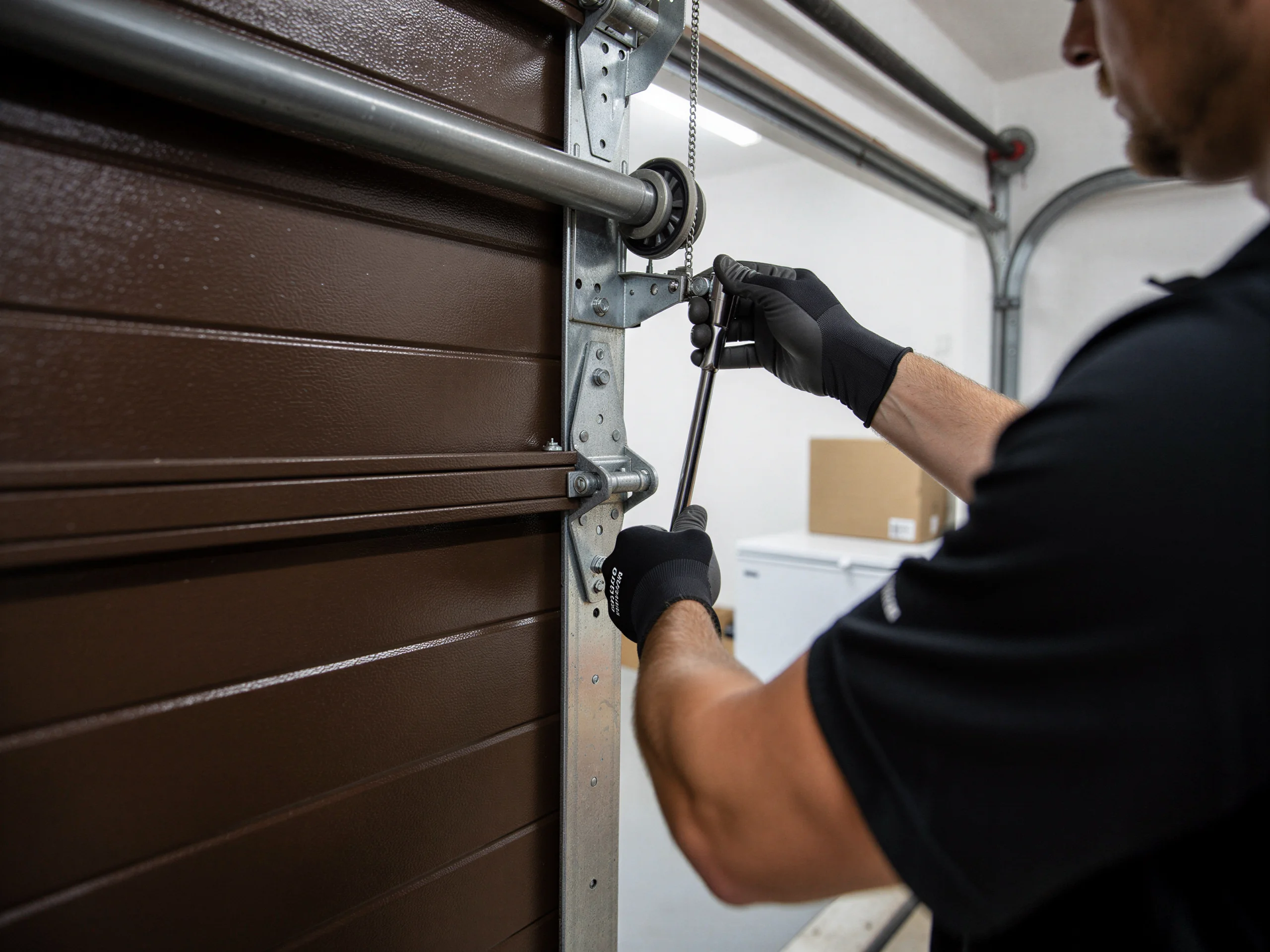
The tech releases tension on the torsion spring first - that's non-negotiable, since a cable job done with the spring still loaded is how people get hurt.
From there it's removing the damaged cable, checking the drum for grooves or burrs where the old cable dug in, and checking the bottom bracket the cable anchors to. If the drum's scored up, it gets replaced along with the cable rather than reused, because a damaged drum will fray the new cable the same way.
Both cables usually get swapped together even if only one failed, since the other is the same age and under the same load. Once the new cable's seated and wound evenly on the drum, the tech re-tensions the spring, runs the door through a full cycle, and checks that it's tracking straight and stopping where it should.
On a door where the track is also bent or the rollers are shot from the same age and heat exposure, that gets flagged separately - a cable fix doesn't correct a track problem, and bolting a new cable onto a bent track is a repair that won't last.
Questions
It's possible but not something we'd recommend if the spring is still under tension, which it almost always is on a cable that's frayed but hasn't fully let go. Releasing torsion spring tension incorrectly is how people get seriously hurt. If the door's already down and the spring looks slack, that's different, but most cable jobs involve a loaded spring.
Cables usually fray gradually, strand by strand, often where they wrap the drum. On an older door you often can't see the wear until it's advanced, especially if the fraying is on the inside wrap against the drum rather than the visible section. A sudden snap is usually the last stage of a wear process that's been running for months.
Not always, but on a door old enough to need a cable, the spring is frequently near the end of its own cycle life. A tech should check spring condition while the cable is off anyway, since that's when the spring is already de-tensioned and easiest to inspect properly.
If the door looks crooked, hangs unevenly, or you can see frayed wire strands near the bottom corners, that points to a cable. If the door won't move at all and looks level, that's more likely the opener or a different mechanical issue. A crooked, uneven door almost always means a cable, not the opener.
Explore more
Ready when you are
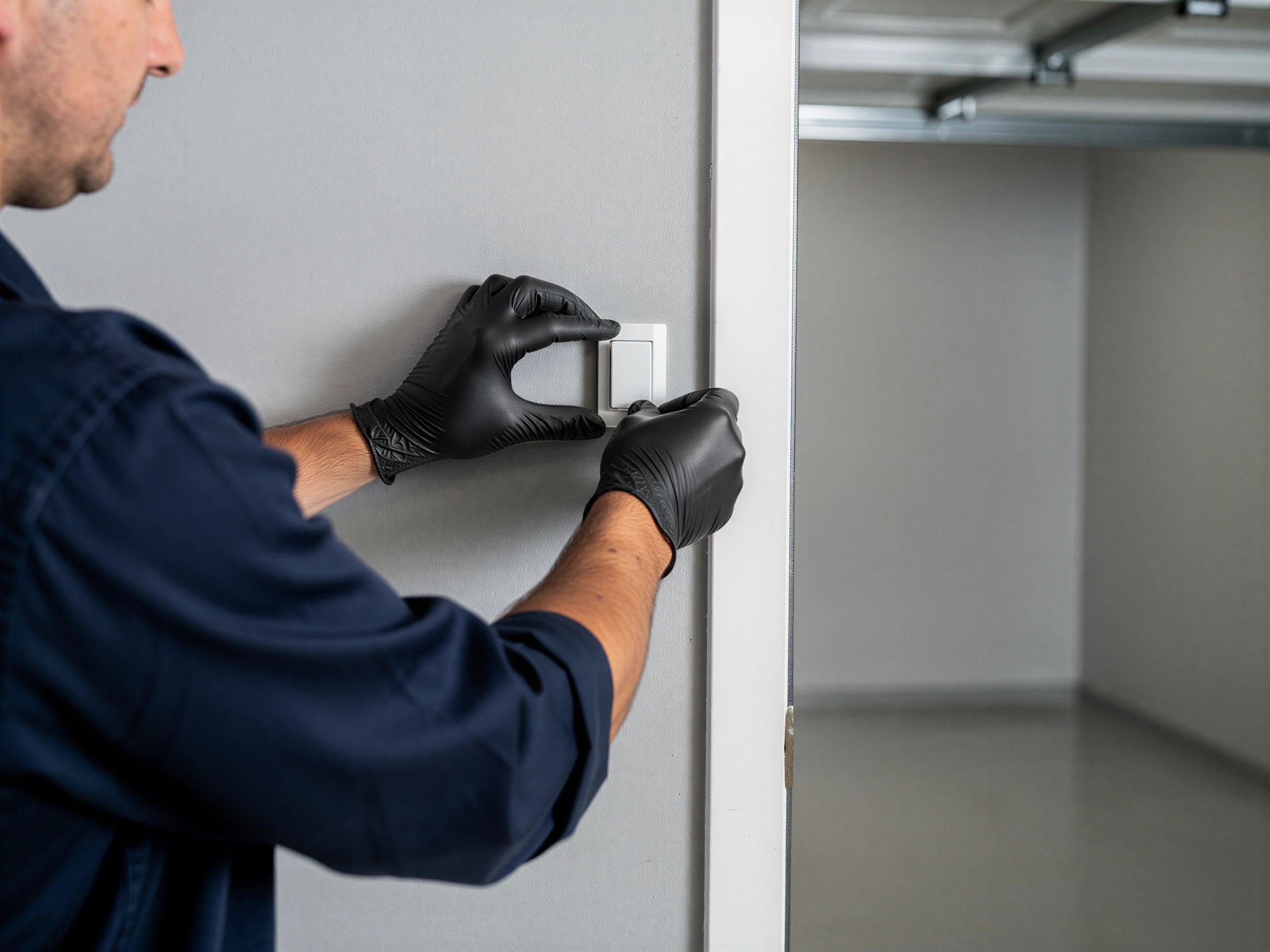
Bedford Garage Door Pros repairs and installs garage doors, springs and openers in Bedford, TX and the surrounding area.